  
|
Posted By SDA National,
Tuesday, March 3, 2026
Updated: Tuesday, March 3, 2026
|
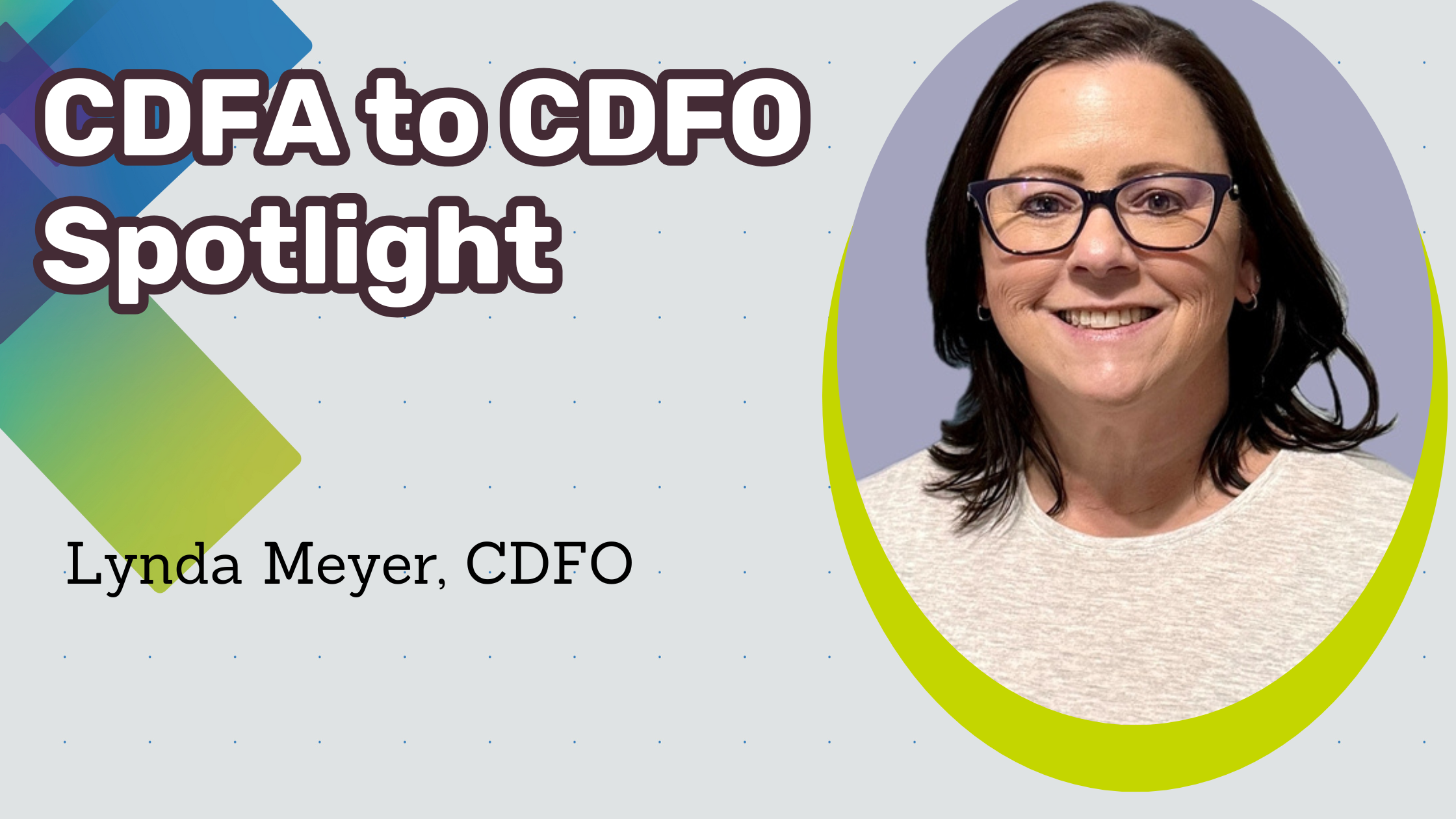
SDA’s transition from Certified Design Firm Administrator (CDFA) to Certificate in Design Firm Operations (CDFO) reflects the evolving leadership role of today’s design firm professionals. To recognize the strength of the original CDFA, existing holders completed only the new Leadership section of the exam. Those who passed earned the CDFO—demonstrating both deep operational knowledge and the leadership skills shaping the future of the profession.
Lynda Meyer, MSA, CDFO
What inspired you to pursue the CDFO certification after having received your CDFA?
After earning my CDFA in 2009—studying alongside my chapter through what were then known as PEGs (now Focus Groups)—I gained a much deeper understanding of the A/E/C industry. As an accounting manager at the time, my role didn’t always allow me visibility into the day-to-day challenges of project management, IT, marketing or operations. The CDFA helped bridge that gap and broaden my perspective. Now, as I continue to grow in my leadership role, pursuing the CDFO felt like a natural next step. This certification aligns with my commitment to becoming a more strategic thinker and a more effective CFO. It’s not just about deepening my technical expertise—it’s about stepping out of my comfort zone and strengthening the leadership and critical thinking skills needed to guide my firm forward.
How has earning your CDFO credential impacted your confidence, skills, or credibility in your role?
Earning my CDFO has reinforced my commitment to excellence in the A/E industry and demonstrated my dedication to continuous growth in my areas of expertise. It’s expanded my skill set and strengthened my confidence as a leader, particularly in approaching challenges with a more strategic mindset. I feel more equipped than ever to contribute at a higher level and guide my firm with clarity and purpose.
Were there any doubts or hurdles you had to overcome in deciding to take the Leadership Section? How did you move past them?
For me, there were no doubts about taking the Leadership section—I was genuinely excited for the opportunity to learn and grow. The only hurdle was making sure I dedicated the time to study and truly absorb the material. I approached it with curiosity and a desire to expand my knowledge base, knowing it would make me a stronger leader and a more well-rounded contributor to my firm.
What surprised you most about the preparation or exam process?
What surprised me most about the preparation process was how genuinely engaging and well-crafted the materials were. The audiobook quickly became one of the most impactful I’ve listened to—it held my attention and felt incredibly relatable to both my professional and personal experiences. I also really appreciated the study guide—it was clearly written, easy to follow, and perfect for highlighting, which is how I learn best. Altogether, the resources made the process enjoyable and effective.
Did you engage with the Path2Success program, CDFO Study Group, mentor, or other resources? If so, how did it help?
For this particular exam, I didn’t engage with the Path2Success program, study group, or a mentor. I chose to study independently this time, using the provided materials, which were clear, engaging, and well-structured—more than enough to support my preparation.
What topic or section challenged you the most--and how did you tackle it?
I wouldn’t say any one topic stood out as more challenging than the others—instead, the overall challenge was absorbing and fully understanding all 21 Laws of Leadership, since the content was entirely new to me. That said, I approached it with focus and consistency, taking time to reflect on each law and how it applied to both my personal and professional life, which made the material more meaningful and easier to retain.
How have your employer or colleagues responded to your certification?
My colleagues and employer were incredibly supportive and excited about my certification. They celebrated the achievement with me and even promoted it on our company’s social media, which was a great show of encouragement. It meant a lot to see my professional growth recognized and shared in such a public way.
What would you say to someone in the A/E industry who is unsure if the CDFO credential is worth it?
I would say—absolutely, it’s worth it. The CDFO credential goes beyond technical knowledge; it helps you grow into a more strategic, well-rounded leader in the A/E industry. If you’re looking to elevate your role, understand the bigger picture of firm operations, and build confidence in your decision-making, this certification is a powerful step forward. It pushes you to think differently, connect the dots across departments, and lead with intention. Investing in yourself through the CDFO is truly an investment in your firm's future too.
Tags:
AEC Leadership
AEC Operations
CDFO
Certificate in Design Firm Operations
Design Firm Operations
Get Certified
Permalink
| Comments (0)
|
|
|
Posted By Stephanie Kirschner, FSDA,
Thursday, February 26, 2026
Updated: Thursday, February 26, 2026
|

Operations personnel keep AEC firms moving, linking project managers, architects, engineers, field teams, and clients. Two development tools can dramatically amplify that impact: coaching and mentoring. They’re related, but not the same, and knowing when to use each helps your people (and projects) level up.
|
Coaching vs. Mentoring at a Glance
|
|
Dimension
|
Coaching
|
Mentoring
|
|
Primary purpose
|
Improve performance and behaviors tied to specific goals
|
Develop the whole person and career over time
|
|
Time horizon
|
Short, time-bound (weeks–months)
|
Longer-term (months–years)
|
|
Who drives?
|
Learner sets goals; coach facilitates discovery & accountability
|
Mentee sets aspirations; mentor shares experience, advice & network
|
|
Scope
|
Current role, targeted skills (e.g., running a kickoff, reviewing submittals)
|
Broader development (e.g., career path, influence, firm navigation)
|
|
Methods
|
Powerful questions, feedback, practice, reflection
|
Storytelling, perspective, introductions, sponsorship
|
Guiding Principle:
- Choose coaching when someone must perform now.
- Choose mentoring when someone needs context, confidence, and a longer-term growth plan.
- Add sponsorship when someone needs visible opportunities and advocacy to advance.
Your Field Guide: Moments to Coach & Mentor
The “Lock It In” Principle: Learn It → Apply It → Now
Lock It In, as taught by Jonathan Wilson (PSMJ Resources), turns passive listening into active learning by having the learner apply the skill immediately after you teach it.
For example, after you explain the Accounts Payable (A/P) process, ask:
- “Can you explain it back to me?”
- “Can you show me the file naming convention we use?”
- “Can you tell me 2 details that must be on the invoice before paying?”
- “Will you come back to me with improvements in the process if you find any needed?”
Lock It In = Don’t just tell it. Don’t just show it. Let them do it.
Celebrate Mistakes (Learn, Don’t Shame)
- Own it in the moment: “That was my miss, thanks for catching it.”
- Debrief quickly: “What happened here?” “What can we try next time?”
- Strengthen systems: Would a checklist or workflow catch this earlier?
Coaching Opportunities by Time Frame
- 3 minutes – Quick learning bite: Share a tip/video; ask, “What’s one thing you’ll try next?”
- 5 minutes – Micro-training: Demo a step; “Now you do the next one.”
- 10 minutes – Focused 1:1: Tackle a challenge; end with clear next step + date.
- 30 minutes – Coffee chat / Lunch & Learn: Build relationship; “What insight will you apply next?”
- 60 minutes – Team workshop / Firm-wide learning session: Assign action items for next check-in.
- 1–3 hours – Deep dive learning: Apply immediately to a live operational system or project.
- 1–3 days – Retreat / Intensive: Close with written action plans, accountability partners, and scheduled follow-ups.
Coaching Best Practices
- After every moment, ask: “What did you take away?”
- Slow down; focus on one or two lessons at a time.
- Reinforce by repeating key ideas in future touchpoints.
- Follow up: “Did you try it? What came up?”
Coach with Empathy
Listen without interrupting, match their pace, and check in with “How are you feeling about this?” before “Any questions?” Psychological safety fuels real growth.
When to Coach vs. When to Mentor (Quick Scenarios)
- Coach a project coordinator to run tomorrow’s OAC meeting: rehearse the agenda, role-play stakeholder questions, and commit to one improvement.
- Mentor an operations person mapping a move from project support to marketing/BD: share how the firm wins work, offer feedback on a portfolio, and make two introductions.
- Sponsor a rising team member: put their name forward to lead a client touchpoint or an internal improvement sprint.
Make It Real in Your Firm
- Publish a shared one-pager (use the table above) so PMs and PMAs align on terms and expectations.
- Offer both pathways: short, skills-focused coaching for immediate performance and relationship-based mentoring for broader development.
- Measure what matters:
- Coaching: observable behavior change, meeting outcomes, accuracy/quality.
- Mentoring: role readiness, internal mobility, retention, engagement.
- Equip leaders to teach basic coaching skills (questioning, contracting, and feedback) and how to mentor without turning sessions into status updates.
- Close the loop: schedule brief follow-ups to check what was applied and what’s next.
References/Resources
SDA does not endorse any products or services mentioned, and SDA does not assume responsibility for any circumstances arising out of the interpretation, application, use, or misuse of any information presented. SDA recommends that the reader consult the appropriate legal, financial, or human resource counsel before implementing the information contained herein.
Tags:
AEC Leadership
AEC Learning
AEC Mentoring
SDA National
Permalink
| Comments (0)
|
|
|
Posted By SDA National,
Tuesday, February 24, 2026
Updated: Tuesday, February 24, 2026
|
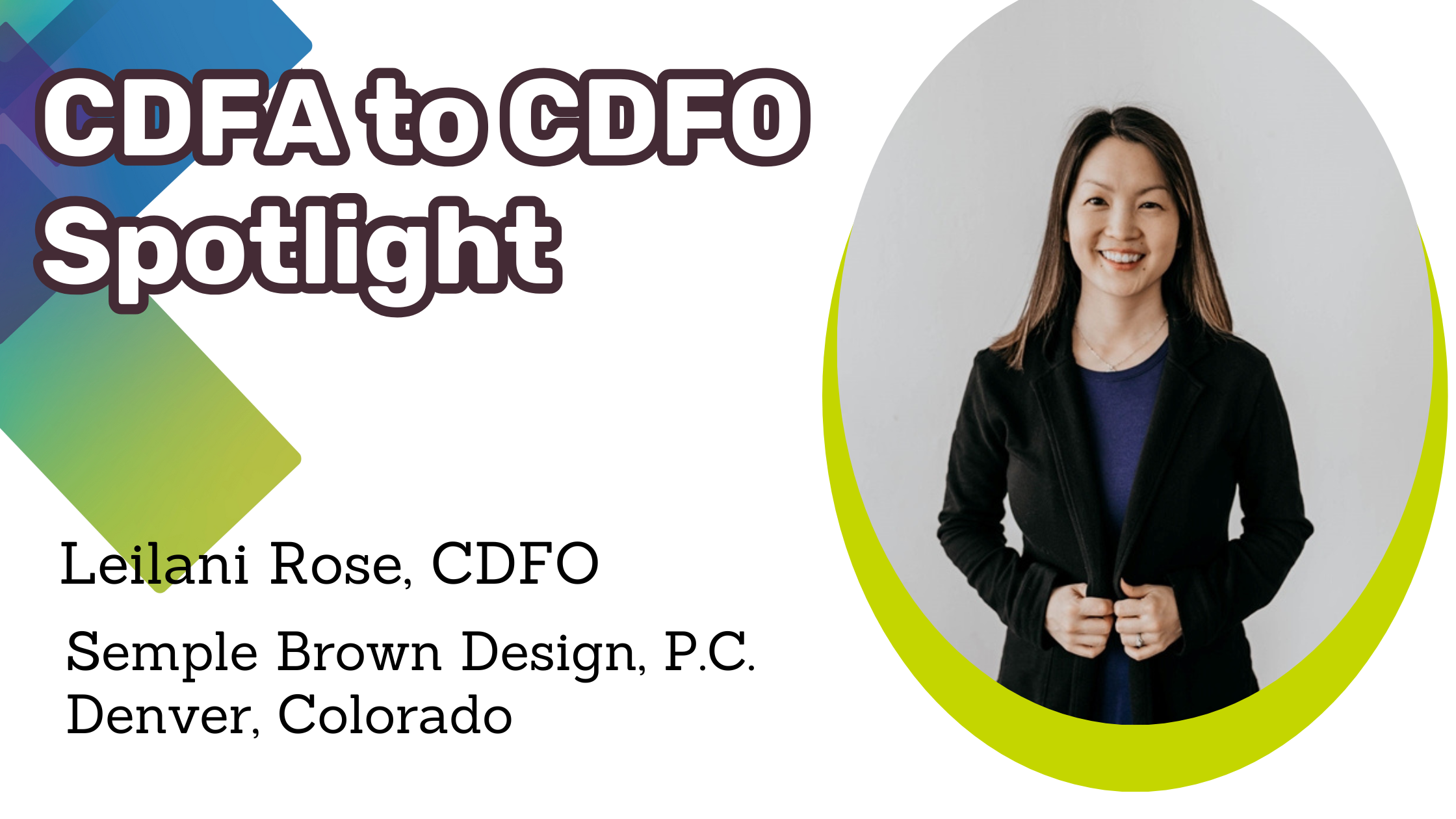
SDA’s transition from Certified Design Firm Administrator (CDFA) to Certificate in Design Firm Operations (CDFO) reflects the evolving leadership role of today’s design firm professionals. To recognize the strength of the original CDFA, existing holders completed only the new Leadership section of the exam. Those who passed earned the CDFO—demonstrating both deep operational knowledge and the leadership skills shaping the future of the profession.
Leilani Rose, CDFO
Office Manager, Senior Associate at Semple Brown Design, P.C.
What inspired you to pursue the CDFO certification after having received your CDFA?
I was inspired to pursue the CDFO certification when I heard that it reflected more of a mid-career design administrator, in terms of leadership and experience.
How has earning your CDFO credential impacted your confidence, skills, or credibility in your role?
I feel that it is a tangible way to show my leadership team that I am striving to always learn and grow and improve my skillset.
Were there any doubts or hurdles you had to overcome in deciding to take the Leadership Section? How did you move past them?
It's a time commitment as you have to set aside time to study and schedule your test -- but signing up for the Path2Success program last fall helped me keep up with my reading, and scheduling my test helped me set a goal that I could work towards.
What surprised you most about the preparation or exam process?
Understanding my own leadership style better, and also recognizing what didn't work for me.
Did you engage with the Path2Success program, CDFO Study Group, mentor, or other resources? If so, how did it help?
I signed up for the Fall 2024 Path2Success program, and we read and discussed the "21 Irrefutable Laws of Leadership" book; it is one of reading materials towards the CDFO portion of the exam, so it helped me study for the exam.
What topic or section challenged you the most--and how did you tackle it?
A lot of contemporary books on leadership, including the ones that were the recommended readings, felt a little male-centric while a majority of design administrators tend to be female, so I felt a dissonance there and felt like there was something missing. I tackled it by taking what I could learn and applying it the best I could.
How have your employer or colleagues responded to your certification?
They were very proud and happy to know that I gained this new certification.
What would you say to someone in the A/E industry who is unsure if the CDFO credential is worth it?
The CDFO certification is a great way to demonstrate your experience and leadership as a design administrator, and it can show your leadership team that you are constantly striving for improvement. There are so few certifications specifically geared towards our role in this industry, so why not take advantage of a certification that is widely recognized across the A/E industry?
Tags:
AEC Leadership
AEC Operations
CDFO
Certificate in Design Firm Operations
Design Firm Operations
Get Certified
Permalink
| Comments (0)
|
|
|
Posted By SDA Headquarters,
Tuesday, February 17, 2026
Updated: Tuesday, February 17, 2026
|
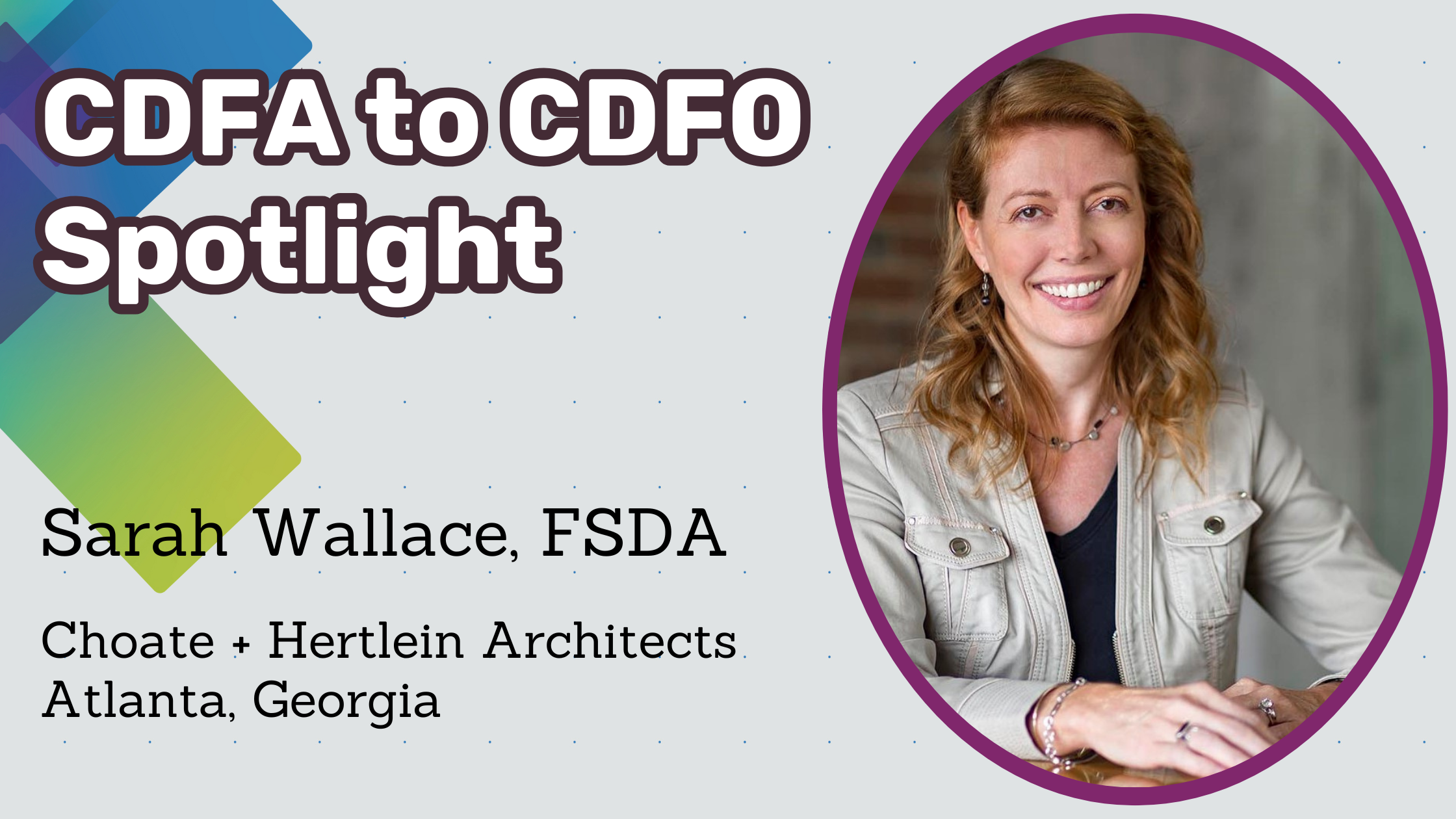
SDA’s transition from Certified Design Firm Administrator (CDFA) to Certificate in Design Firm Operations (CDFO) reflects the evolving leadership role of today’s design firm professionals. To recognize the strength of the original CDFA, existing holders completed only the new Leadership section of the exam. Those who passed earned the CDFO—demonstrating both deep operational knowledge and the leadership skills shaping the future of the profession.
Sarah Wallace, FSDA, LEED Green Associate
Controller at Choate + Hertlein Architects
What inspired you to pursue the CDFO certification after having received your CDFA?
I have always been passionate about leadership and was thrilled when it was recognized as an official focus area. I believe leadership skill development is directly correlated to continued personal and professional growth. I was excited to register and hopefully encourage others to pursue their CDFO!
How has earning your CDFO credential impacted your confidence, skills, or credibility in your role?
Passing the CDFA helped me shore up knowledge in areas I was less confident in (i.e. HR) and resulted in a higher level of confidence in my skill set all around. When interviewing for my current position year ago, I know that this credential definitely provided credibility in my A/E/C management abilities.
Were there any doubts or hurdles you had to overcome in deciding to take the Leadership Section? How did you move past them?
Having participated in the 2024 Path2Success sessions, I felt very confident in registering for the exam. The only hurdle was making time each week to dedicate to reading the book, watching the videos, and studying.
What surprised you most about the preparation or exam process?
I continue to be surprised by how often I refer to the different Laws of Leadership and also find myself referencing the different types outside of the office as well.
Did you engage with the Path2Success program, CDFO Study Group, mentor, or other resources? If so, how did it help?
I did participate with the Path2Success program originally and watched the recorded sessions again during my study process as provided by the CDFO Study forum. I read all CDFO forum posts and challenged myself to actively post replies to many of them to help engage/inspire others in the group to do the same. I also was fortunate to have a fellow SDA member send me a test exam prepared by ChatGPT, which helped reinforce areas that needed more focus. I am a tactile learner, so created flashcards that also helped me retain all the information. Overall the combination of all available resources made it easy to prepare and reach out as needed throughout the study process.
What topic or section challenged you the most--and how did you tackle it?
The Law of the Inner Circle made me realize I didn't have one. So that has brought a unique level of awareness to my own personal development that I am working on addressing.
How have your employer or colleagues responded to your certification?
I let the principals know that I planned to take the CDFO exam during my annual review at the beginning of the year while discussing my short-term goals to hold myself accountable and ensure I did not delay. This organically led into the ongoing discussion I have been having regarding updating my title (which recognizes advancement for those of us in smaller firms without actual upward mobility paths). One of the Principals suggested this could be reviewed after receiving the new credential mid-year. I am looking forward to continuing the title discussion and believe that achieving my CDFO demonstrates my ongoing commitment and dedication to my career in A/E/C business operations and management, which will ultimately help me continue to advocate for myself now and in the future.
What would you say to someone in the A/E industry who is unsure if the CDFO credential is worth it?
There's no better time to invest in yourself and your future than now, don't hesitate, register today and you will see the difference it makes in your career!
Tags:
AEC Leadership
AEC Operations
CDFO
Certificate in Design Firm Operations
Design Firm Operations
Get Certified
SDA Fellow
Permalink
| Comments (1)
|
|
|
Posted By Jennifer Greene, CDFO,
Thursday, February 12, 2026
Updated: Thursday, February 12, 2026
|

SDA’s transition from Certified Design Firm Administrator (CDFA) to Certificate in Design Firm Operations (CDFO) reflects the evolving leadership role of today’s design firm professionals. To recognize the strength of the original CDFA, existing holders completed only the new Leadership section of the exam. Those who passed earned the CDFO—demonstrating both deep operational knowledge and the leadership skills shaping the future of the profession.
Melanie Schmidt, CDFO
Office Administrator at Snell Engineering Consultants
What inspired you to pursue the CDFO certification after having received your CDFA?
My job is growing in the Operations side of our firm, and the CDFO credential is more fitting for my job goals.
How has earning your CDFO credential impacted your confidence, skills, or credibility in your role?
It is empowering to have the CDFO credential. It validates the work I do, gives worth to my role within my firm, and shows those I interact with outside of my firm that I am dedicated and educated in my role.
Were there any doubts or hurdles you had to overcome in deciding to take the Leadership Section? How did you move past them?
Yes, I didn't want to fail the Leadership Section test. Knowing I already had the CDFA credential, I wavered between settling with what I had and what I would have to do to pass the Leadership section. It was a lot of information. Then I decided that a leader represented who I wanted to be in my career, so I decided to take the exam for the CDFO certification.
What surprised you most about the preparation or exam process?
It surprised me that I already knew some of the information as I studied. Much of it was intuitive. The exam was challenging, and I was surprised that I passed!
Did you engage with the Path2Success program, CDFO Study Group, mentor, or other resources? If so, how did it help?
The Path2Success program has been phenomenal for me. It inspired me to take on many new challenges and pushed me to grow in ways I didn't think I could. I did not make the sign-up in time this year and am disappointed, but I will try again next year. I also used the CDFO study group materials. The practice tests and videos were really helpful.
What topic or section challenged you the most--and how did you tackle it?
The Leadership section isn't necessarily black and white with situational questions and answers. I decided to 'go with my gut' rather than overthink my answers.
How have your employer or colleagues responded to your certification?
My employer and colleagues are super supportive. They encourage me to learn and grow in my career and celebrate the certifications with me.
What would you say to someone in the A/E industry who is unsure if the CDFO credential is worth it?
DO IT! There are so many reasons why. The ability to learn from others, networking, self-growth, career growth, earned respect within your firm, a seat at the table, empowerment.
Tags:
AEC Leadership
AEC Operations
CDFO
Certificate in Design Firm Operations
Design Firm Operations
Get Certified
Permalink
| Comments (4)
|
|

 Blog Home
 All Blogs
 RSS
RSS